When you think of ocean creatures, sharks and whales might come to mind first. But there’s another group of marine animals that’s been floating around our oceans for over 500 million years – jellyfish! These fascinating creatures are way more complex and interesting than their simple appearance suggests. Ready to dive into some incredible jellyfish facts that’ll make you see these gelatinous drifters in a whole new light?
They’re Not Actually Fish (Surprise!)
Despite their name, jellyfish aren’t fish at all. They don’t have gills, fins, or even a backbone. Instead, they’re cnidarians, which puts them in the same family as corals and sea anemones. Their bodies are made up of about 95% water, which explains their jelly-like appearance and why they seem to vanish when they wash up on beaches.
Fun Facts About Jellyfish That’ll Blow Your Mind
Here are some seriously cool tidbits about these ocean wanderers. Did you know that jellyfish don’t have brains? Yep, they navigate the ocean without a central nervous system, relying instead on a simple nerve net that helps them detect light, smell, and respond to other stimuli. It’s like having a biological autopilot system!
Another wild fact: some jellyfish are practically immortal. The Turritopsis dohrnii, nicknamed the “immortal jellyfish,” can reverse its aging process and return to its juvenile state when faced with stress, injury, or old age. Talk about hitting the reset button on life!
Moon Jellyfish Facts: The Ocean’s Gentle Giants
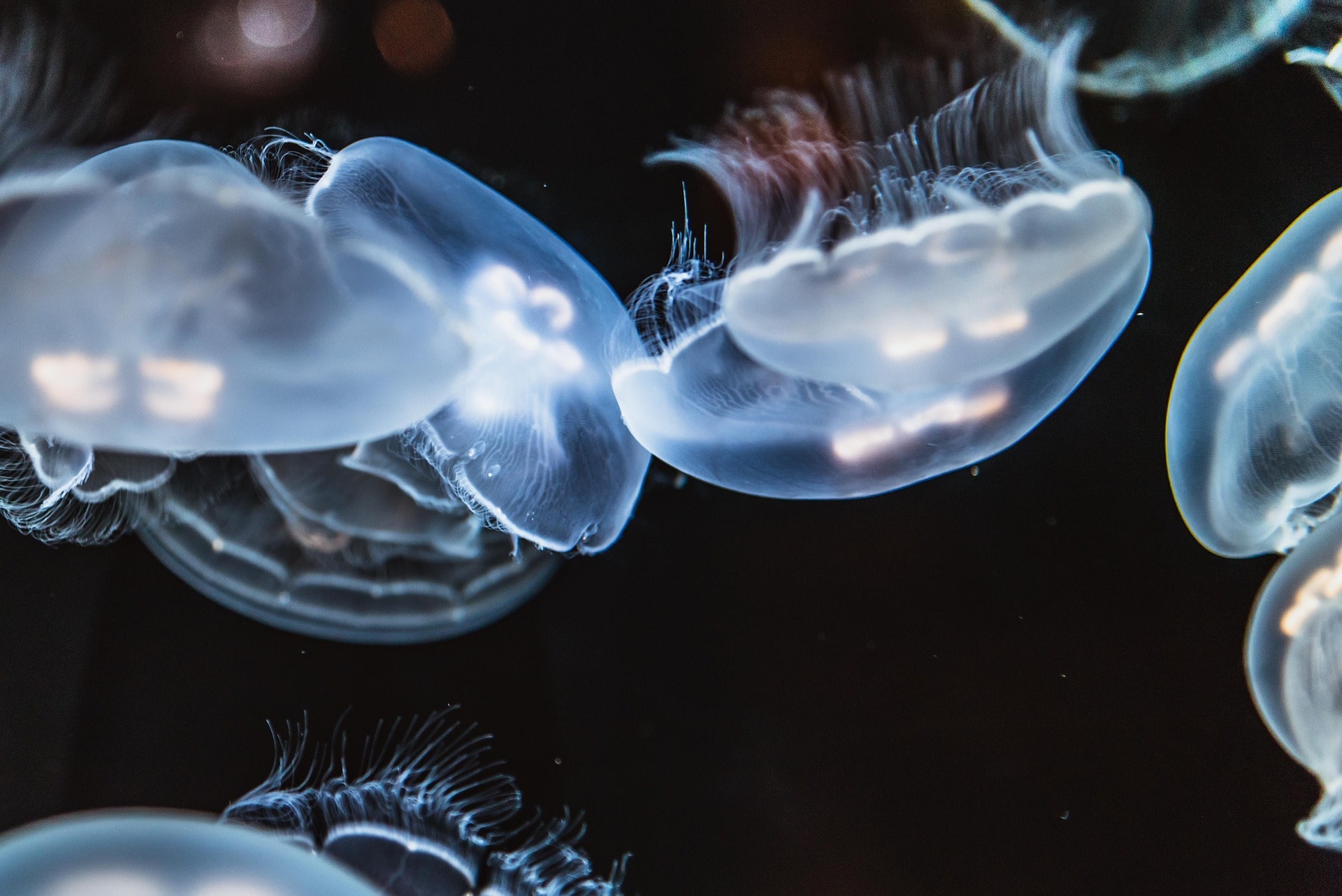
Moon jellyfish are probably the most recognizable species, and moon jellyfish facts are particularly fascinating. These translucent beauties can be found in oceans worldwide and are surprisingly harmless to humans. Their sting is so mild that most people barely feel it. You can easily spot them by their four distinctive horseshoe-shaped reproductive organs visible through their bell.
Moon jellies are also amazing survivors. They can tolerate a wide range of water temperatures and salinity levels, which is why they’ve managed to spread across the globe. Plus, they’re masters of efficiency – they can survive for months without food by shrinking their bodies and slowing their metabolism.
Jellyfish Characteristics: Built for Ocean Life
The basic jellyfish characteristics are pretty remarkable when you think about it. Their umbrella-shaped bell propels them through water by contracting and expanding, while their trailing tentacles are equipped with specialized cells called cnidocytes that contain tiny harpoons called nematocysts. When triggered, these fire venom into prey or threats faster than a bullet!
Most jellyfish have radial symmetry, meaning their body parts are arranged around a central point like spokes on a wheel. This design helps them sense danger and food from any direction – pretty smart for creatures without brains!
Box Jellyfish Facts: The Ocean’s Most Feared
Now for some intense box jellyfish facts. These cube-shaped creatures are among the most venomous animals on Earth. Found primarily in the Indo-Pacific region, box jellyfish have tentacles that can stretch up to 10 feet long, each packed with millions of nematocysts containing potent toxins.
What makes them particularly dangerous is their speed and vision. Unlike most jellyfish that drift with currents, box jellies can actively swim at speeds up to 4.6 mph. They also have 24 eyes arranged in clusters, giving them surprisingly good vision for hunting and avoiding obstacles.
More Interesting Facts About Jellyfish
The interesting facts about jellyfish just keep coming! Some species are bioluminescent, creating their own light shows in the deep ocean. Others, like the upside-down jellyfish, have formed partnerships with algae and spend their lives inverted on the seafloor, farming their own food through photosynthesis.
Jellyfish also play crucial roles in ocean ecosystems. They’re both predators and prey, helping maintain the balance of marine food chains. Some fish species even use jellyfish tentacles as protection, swimming among them like underwater bodyguards.
Speaking of amazing marine creatures, if you’re fascinated by unique animal adaptations, you might also enjoy learning about other obscure animal facts that showcase nature’s incredible creativity.
Ancient Survivors in Modern Oceans
Jellyfish have witnessed the rise and fall of dinosaurs, ice ages, and mass extinions. Their simple but effective body plan has remained largely unchanged for hundreds of millions of years – proof that sometimes the simplest solutions are the best ones.
Conclusion
From their brainless navigation systems to their incredible diversity and survival skills, jellyfish facts reveal these creatures to be far more complex and important than their simple appearance suggests. Whether it’s the gentle moon jellyfish drifting through coastal waters or the formidable box jellyfish patrolling tropical seas, these ancient mariners continue to thrive in our modern oceans. Next time you see a jellyfish, take a moment to appreciate the hundreds of millions of years of evolution floating right before your eyes. Who knows? You might just develop a new respect for these remarkable ocean drifters.